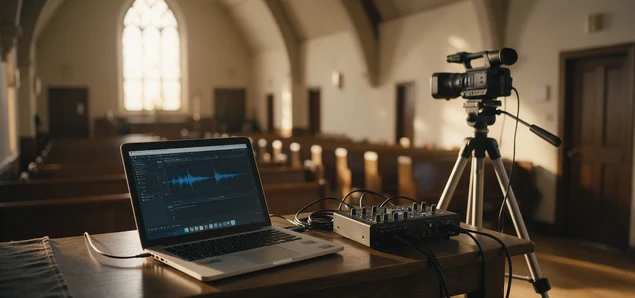
On 15 September a church in Tampa was in the middle of its service when the broadcast stopped. An automated filter had flagged it under a child safety rule. The church appealed the same day, and a reviewer upheld the deletion. Nobody broke a rule. Days later it posted again: “To this day we can’t live stream.”
That one is a church, but the filter does not know what a church is. It reads a picture and a sound, which is why a fitness class, a podcast that says the wrong word and a concert with the wrong song behind it all sit in the same queue. What ends your broadcast may not be a cable or a laptop, it can be a decision made somewhere else, in under a second.
It is not one account. Two days later a worship channel wrote that it had been taken down and reinstated three times, with “No warnings. No strikes.” Its own count: “The channel has been up for years… this is the 3rd time in 90 days.”
Nobody wins an appeal before eleven o’clock on a Sunday morning. So spend the hour on a different question: what can the people who were going to watch still watch while your channel is dark, and where does that thing live?
The appeal runs on somebody else’s calendar
A filter that checks millions of broadcasts gets some of them wrong, and the churches caught this month were not doing anything unusual. No platform anywhere, free or paid, can promise you a human reviewer inside the hour, because that is not a promise anyone can keep at that size.
The decision is not yours, and neither is the timing. The Tampa church filed on the same day and still lost. The Arizona channel got reinstated all three times and still had three stretches where nobody could watch anything on it. Both survived it, and neither had anything to show people while it was happening.
What you need is a second copy of the service, on a page with your church’s name in the address, that stays up while you wait.
The second copy is a page with a date on it
Almost every church already has the recording. What most do not have is somewhere to put it. So the file sits on a hard drive, or on the channel that went down, and when somebody asks for last month’s sermon the answer is a link that one person has to dig out.
None of this needs a specialist.
Give every service its own page on the church website. If you are not a church, read “service” as “episode”, “class” or “show”, because nothing else here changes. Put the date in the title, like “Sunday Service, 20 September 2026”, then the sermon title or the passage. The date is what makes it findable in March, by you and by everybody else.
Put the video on that page, and write four or five lines of plain text under it: the passage, who preached, anything announced that morning. Most people skip those lines, and they are the reason the page gets found. Somebody searching half a phrase they remember lands on your text, because nothing can read what was said inside the video.
Then make one more page, called Past Services, and list every service page on it, newest at the top. That is the archive. The only ongoing work is those few lines every week.
People are already looking for that page. On 20 September @DyerMatthewD wrote: “I wish they would archive all Pastor Peters sermons on their site to make them easier for people to access.” The day before, @IPostAndGhost explained why the website is where they look: “Most churches put their sermons online on their website.” He meant how you check out a church before you ever walk in.
Keep streaming where your people already are
None of this is an argument for leaving the channel you use now. Your congregation watches on their phones, in an app they already have open on Sunday morning, and moving them somewhere else on principle costs you viewers for nothing. Keep it exactly as it is.
What changes is what you expect that channel to be. Keep it as the place people watch live, and keep the recording somewhere you control. Those two jobs look like one job right up until the week they come apart, which is the week both of those churches had this month.
Karl Vaters, who writes and podcasts about small-church ministry, put the useful half of this in one line on 16 September: online church, he says, “is not church, it’s content.” Argue with the first half if you want. The second half is an instruction. Content gets a title, a date and an address of its own. A live stream gets a start time, and then it is over, or it is ended for you.
Two checks, and both are free. Open your church’s site on your phone the way a stranger would, with no bookmarks, and find last month’s service in under a minute. Then ask somebody in the congregation who is over seventy to do the same while you watch. If neither of you can find it, the only copy of Sunday is on a channel somebody else controls.
Also this week
Friday night is a library
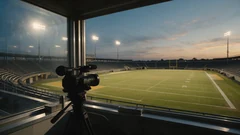 State Champs Sports Network covers Michigan high school football, and the Friday game does not end when the whistle goes. It sits on their own site the next day as the latest replay, with a watch page of its own, next to the articles about which games to watch this week. If all you ever post is a live link, everything you made on Friday is gone by Monday, and the people who missed it have nowhere to go.
Read more: State Champs Sports Network
A finished stream is not on demand yet
 This one is ours, so take it as a note rather than news. When your channel goes off, the recording does not become a replay by itself. It lands in your recordings list, and turning it into a video people can watch on your own site is a step you take on purpose, with a price on it or without one. Do it on a quiet Tuesday, not in the week you find out you need it.
Read more: See how recordings become on demand
The concert ends, the catalog starts
 SFJAZZ runs a members page called Fridays Live, where every Friday carries a broadcast of that evening’s concert from the SFJAZZ Center, and where performances nobody has seen before turn up between the live nights. A member in February is paying for everything already recorded, not for one Friday night. If your events are good and your archive is empty, you are asking people to pay from scratch every time.
Read more: SFJAZZ at Home, Fridays Live
Not every replay should live forever
 KHEN, a community station in Colorado, puts a plain sentence at the top of its archive: “Shows will remain here for the number of days listed. Because of copyright restrictions music shows can’t be downloaded or podcast.” Every show carries its own number of days to stay. WYSO says it in one line on its Midday Music page, that locally produced shows stream for two weeks after they air. Both picked the window on purpose, show by show, and then told people what it is. Set yours before somebody asks why a show from 2019 is still up.
Read more: KHEN archive and WYSO Midday Music
Table of Content