
Professional live streaming

Professional Live Streaming Platform for Your Own Website

Connect your encoder. Broadcast on your own site. Keep the replay.

A professional live streaming platform must take your encoder’s feed, play it on your page, control access and keep the replay. WpStream does it on your WordPress site.

How it runs

From your encoder to your own page

01 · Channel

Create a live channel

Open the WpStream dashboard inside WordPress and create a live channel. Each channel gets its own page. The broadcast has a home before you go live.

02 · Encoder

Connect your encoder

Paste the server URL and stream key into OBS, Wirecast, Larix or a hardware encoder with a custom RTMP destination. No encoder yet? You can broadcast from a browser.

03 · On air

Go live on your site

The player on your page goes live for your audience. WpStream's streaming service carries the feed, so your web hosting account doesn't have to serve the live video.

On your website

Your broadcast, on the page your audience knows

Place the player with the WpStream Player block, an Elementor or WPBakery element, or a shortcode, on any page of your site. Add your own logo, and the broadcast looks like yours.

What makes a live streaming platform professional?

Nine checks a scheduled broadcaster can run on any professional live streaming platform before moving off social media. Each one shows how WpStream meets it.

Nine checks, one page

01

Stable ingest from your encoder. WpStream takes RTMP from OBS, Wirecast, Larix or a hardware encoder, and you can also broadcast from a browser.

02

Delivery that isn’t your web host. The streaming service carries the feed. Your site only hosts the page, and delivery comes from several large networks at once.

03

The player on your own page. Your logo goes on the player, and no WpStream plan shows ads.

04

Control over who watches. Lock to website keeps the feed on your domain (domain restriction, not DRM). Add encryption, or a password page for private events.

05

A way to charge for access. Pay-per-view comes on every paid WpStream plan, and subscriptions run through WooCommerce Subscriptions.

06

A replay after the broadcast. Turn recording on before you go live, and the recording becomes a free or paid video on demand.

07

Cost you can predict. Plans count broadcast, viewer and recording hours, plus a simultaneous-viewer cap, so you can work out a season’s bill before it starts.

Run out mid-season and you can still go live, though limits and WpStream branding may apply until you top up or upgrade.

08

A test before air. Short test streams are recommended before important broadcasts. They use broadcast hours, so keep a few hours for rehearsals.

09

More than one person can go live. Broadcasters in non-admin roles go live without touching the WordPress admin dashboard.

When something goes wrong, you can reach the WpStream support team, as the reviews below describe.

Run all nine before you sign up anywhere, including here.

Three routes

Social platform, hosted platform or your own website?

Free social platforms win on reach, and that's worth saying first. Facebook's own help page says an embedded Live video "may lead new people to discover" your broadcast.

If discovery is the goal, keep going live there.

Hosted video platforms sell professional live streaming services and meter them in different units. On their own pricing pages, checked September 26, 2026: Dacast counts data transferred and storage.

BoxCast counts viewer hours with no cap on the number watching. Vimeo prices by plan tier with live events from its Advanced plan ($75 a month billed annually).

Restream prices by the number of destinations.

The third route is a live streaming solution on your own WordPress site: the player, the access rules and the replay live there, with WpStream carrying the feed and plans counted in hours.

For a scheduled broadcastFree social platformHosted video platformYour website with WpStream
For a scheduled broadcast: Where the audience watchesFree social platform: On YouTube or Facebook, or an embed of itHosted video platform: The vendor's player, embedded on your siteYour website with WpStream: A player on your own WordPress page
For a scheduled broadcast: Around the playerFree social platform: YouTube embeds may show ads and related videosHosted video platform: Branding options vary by vendor and planYour website with WpStream: Your logo on the player, no ads on any plan
For a scheduled broadcast: Charging for accessFree social platform: YouTube: channel memberships, inside YouTubeHosted video platform: Paywall on some plans, such as Dacast's Event planYour website with WpStream: Pay-per-view on every paid plan; subscriptions via WooCommerce Subscriptions
For a scheduled broadcast: Who can watchFree social platform: A Facebook Live embed needs a public audienceHosted video platform: Password and domain options vary by vendorYour website with WpStream: Lock to website, encryption, password page
For a scheduled broadcast: After the broadcastFree social platform: On Facebook, the video stays as a postHosted video platform: Recording storage set by each vendor's planYour website with WpStream: The recording becomes a replay; buyers keep access
For a scheduled broadcast: How it is measuredFree social platform: Free; no plan to measureHosted video platform: Data transferred, viewer hours, plan tier or destinationsYour website with WpStream: Broadcast, viewer and recording hours

Set up the feed before you go live

Four jobs in the WordPress dashboard and the encoder. The first three are set once. The test comes before every important broadcast.

Any encoder or professional live streaming software with a custom RTMP destination works: our encoder guide covers the hardware types, and the software guide covers OBS and vMix.

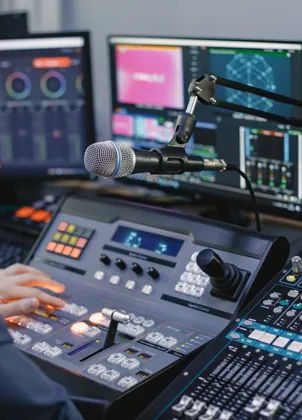
Sound engineer operating a studio console

Record

Turn on recording first

Want a replay? Turn on Record Live Stream when you create the channel. The record setting can't change while the channel is running.
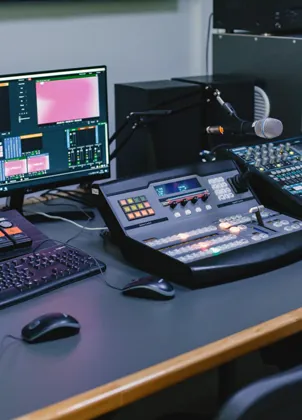
Close-up of audio production equipment

Auto start

Let the encoder start the channel

With Auto TURN ON, the presenter goes live from the encoder without opening the dashboard. Without it, you turn the channel on by hand first.
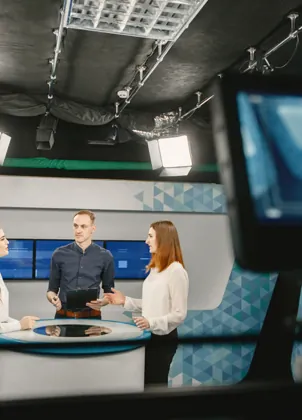
Broadcast camera recording a studio show

Access

Choose who can watch

Put the player on your page. Then pick who watches: everyone, a password, or paid access.

Operator monitoring a live feed

Rehearsal

Run a test stream

Send a short test with sound and movement like the real broadcast. Then watch it on the page, the way your audience will.

On-air habits of a professional broadcaster

Upload headroom

Keep your bitrate well under your upload. WpStream's low-latency guide asks for at least double the bitrate, so a 4.5 Mbps feed wants about 9 Mbps up.

Start early

YouTube advises setting encoders up at least 2 hours ahead and starting them at least 15 minutes before the broadcast is scheduled to begin.

Measure upload, not download

Run a speed test on the connection you'll broadcast from. Read the upload figure. Only that one. Download says nothing about your feed.

Watch dropped frames

OBS says dropped frames mean the connection to the server isn't stable or can't keep up with your bitrate. The software is very rarely the cause.

Backup internet

Keep a second connection ready, such as a mobile hotspot or a different network. If the main line drops, you have somewhere to switch.

Latency on purpose

The feed reaches the audience in about 20 seconds. Low Latency (beta) cuts that to roughly 2 to 5 seconds, meant for auctions and sports followed on a second screen.

Your own player

The broadcast plays on your website

Your WordPress site hosts the page and the viewing experience. WpStream's streaming service carries the live feed.

Add your own logo to the player and choose how live streams and videos appear on your site (see the branding options).

Decide who watches and who pays

A free broadcast needs nothing extra: WooCommerce is optional. Charging for access needs WooCommerce, and recurring access needs the WooCommerce Subscriptions extension.

Set one rule per broadcast, or mix them across a season.

Sold a broadcast? Switch it to the replay and buyers keep access.

Free to view

The broadcast is open to anyone who visits your page. You don't need a store or a checkout.

Password page

For private events, a password-protected viewing page keeps the audience to the people you invite. Private streaming covers the options.

Lock to website

The feed plays only on your domain, so no one can share it on other websites. It's a domain restriction, not DRM.

Encryption

Encrypt the feed for extra protection. The docs note it may affect website performance in some cases, so test it before a big broadcast.

Pay-per-view

Sell one broadcast or one video through WooCommerce, on every paid plan. The pay-per-view walkthrough shows the setup.

Season pass

Recurring access, such as a season pass, runs through WooCommerce Subscriptions, a separate extension. See how memberships work.

Five broadcast schedules, worked out in hours

Viewer hours are the broadcast length times the audience: a 2-hour broadcast watched by 150 people uses 300 viewer hours.

The simultaneous-viewer cap is a separate limit, so a big one-off can fit the hours and still need a larger plan. Check both.

These are labelled examples with assumed audiences, not customer stories.

Example: radio morning show

A 3-hour show every weekday is 66 broadcast hours a month. With 40 people watching on average, that's 2,640 viewer hours: above Plus (2,000), inside Pro (10,000).

Auto TURN ON lets the presenter start from the studio encoder. Recording every show adds 66 hours of stored video a month.

Radio operator speaking into a studio microphone
Example: Sunday service

A 2-hour service watched by 150 people uses 300 viewer hours. About 4.3 Sundays a month make roughly 1,290 viewer hours and 8.6 broadcast hours, which fits Plus (2,000 viewer hours).
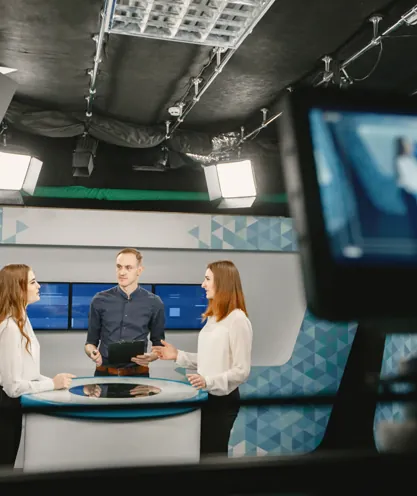
Camera recording a live studio show
Example: club home game

A 2-hour game for 300 fans uses 600 viewer hours. Two home games a month make 1,200, inside Plus. Streaming only a final, with 600 fans at once?

That's over Lite's 200, so Plus One Time ($89, 1,000 simultaneous) covers it.

Sell a season pass and keep each game's replay inside it.

Broadcast camera at a football match
Example: studio live class

About 22 one-hour classes a month with 25 members each use 550 viewer hours and 22 broadcast hours. That's just over Lite (500 viewer hours) and well inside Plus.

Fitness instructor filming a workout
Example: theatre performance

A 2.5-hour performance for 400 people uses 1,000 viewer hours, with 400 watching at once. Plus One Time ($89) covers both; Lite One Time (200 simultaneous, 500 viewer hours) does not.

Sell it as pay-per-view for one night.

Camera facing a lit performance stage

After the broadcast

The broadcast becomes the replay

When the broadcast ends, the recording is processed in the background and listed under Recordings, not at the live URL.

From there you publish it as a free or paid video on demand.

Sold the live broadcast? Switch the same product from Live stream to Video on demand, and everyone who bought it keeps access without paying again.

Recording hours measure the recorded video you keep stored.

Plans measured in hours

Broadcast, viewer and recording hours, with pay-per-view on every paid plan.

Lite

Lite, $24 a month: 100 broadcast hours, 500 viewer hours, 25 recording hours, 200 simultaneous viewers and 5 live channels. Yearly it is $190.

Lite One Time costs $36, and one-time hours don't expire. The studio class example lands just over it, at 550 viewer hours.

Plus

Plus, $59 a month: 250 broadcast hours, 2,000 viewer hours, 100 recording hours, 1,000 simultaneous viewers and 15 live channels. Yearly it is $490, or $89 one time.

The Sunday service example fits here. The radio example needs Pro ($169 a month, 10,000 viewer hours). Ultra ($449 a month) sits above it.

The trial

New accounts start with 20 broadcast, 100 viewer and 10 recording hours. It's a starter allowance, not a free plan, and test streams use broadcast hours. See every plan.

Honest fit

When is WpStream not the right broadcast platform?

Some broadcasts need things WpStream does not list: native live captions or transcripts, attendance records for credit, a contractual uptime SLA, backup ingest with failover, or a guaranteed delay under 5 seconds.

If yours needs one of these, pick a platform that documents it.

Reach is the other case. If the goal is new people finding you, keep a social channel on air.

Broadcasting on your own site is for the audience you already have and the access you control.

Low Latency and Adaptive Bitrate are both beta, and their recommended keyframe intervals conflict (1 second against 5), so they don't pair well.

For most professional streaming, the default delay is fine: "For the vast majority of live streams, a 20-second delay simply doesn't matter," as our low-latency docs put it.

Heard from broadcasters on WordPress.org

Gbrownmail

Last year our church started a new WordPress website and wanted to add our Livestream to a page. After considering several plug ins we chose WPStream and it was an excellent choice.

Never an issue getting the stream up, never an unavailable or down time. Simply reliable! Truly a set it and forget piece of our website.

Plus it is simple for novice WordPressers to use.

"Must have plug in", May 16, 2024

Read the review on WordPress.org

rbxlive

I run pay wall live streams on Rumbleinthebronx.live who I use WPstream for. I contacted them to introduce myself, and discuss what I would like to do.

They had a very fast response time in replying, and have very excellent customer service. Their platform is real easy to understand, and use.

I want to give them a 5 star rating. I would give 10 stars if I could highly recommended.

"Excelent Brand", July 3, 2021

Read the review on WordPress.org

webpp

★★★★★

I had some issues using their service and I was about to give up the whole idea of streaming on my own, but then Beatrice came along with her excellent customer service skills and patience to pull me back in.

Thanks to her help I am now a paid customer to stay. I’m very happy with their streaming service. Recommended to all.

"5-Star Customer Support [Beatrice]", October 25, 2023

Read the review on WordPress.org

More for scheduled broadcasters

Broadcaster questions

Professional live streaming, answered

A professional live streaming platform takes a stable feed from your encoder, delivers it without leaning on your web host, and plays it in a player you brand.

It controls who watches and who pays, keeps a replay, and bills in units you can predict.

WpStream covers these on your own WordPress site, with plans counted in broadcast, viewer and recording hours.

Social platforms bring reach. The platform sets the rules around the player, though. YouTube embeds may show ads, and only YouTube and the video owner earn from them.

A professional platform such as WpStream puts the player, the access rules and the replay under your control.

Yes. WpStream adds a player you place with a block, an Elementor or WPBakery element, or a shortcode.

Your site hosts the page while the streaming service delivers the video, so your web hosting account doesn’t carry the live traffic. Free broadcasts need no store; paid access needs WooCommerce.

Create a live channel in the WpStream dashboard, then paste its server URL and stream key into OBS or your hardware encoder.

Place the player on the page your audience visits and choose who can watch. Before the real broadcast, run a short test stream with sound and movement. Tests use broadcast hours.

Multiply broadcast length by audience to get viewer hours.

For example, a 2-hour weekly broadcast watched by 150 people uses 300 viewer hours, about 1,290 a month, so the WpStream Plus plan ($59 a month, 2,000 viewer hours) fits.

Broadcasting only now and then? One-time plans cover a single event, and their hours don’t expire.

Yes. Lock the feed to your website, encrypt it, or put it behind a password page for private events.

To charge, WpStream offers pay-per-view on every paid plan through WooCommerce, and recurring access such as a season pass runs through the WooCommerce Subscriptions extension.

The same rules can carry into the replay.

Yes, if recording is on before you go live. After the broadcast, WpStream processes the recording and lists it under Recordings.

You then publish it as a free or paid video on demand. Switch a sold broadcast to video on demand and buyers keep access.

Recording hours measure the recorded video you keep stored.

Yes. Social platforms are where new people find you, so keep a channel there for discovery.

The broadcast on your own site with WpStream serves the audience you already have: the access rules, the paid tickets and the replay stay under your control.

Ready when you are

Start your free trial

Try live broadcasting and replays on your website.